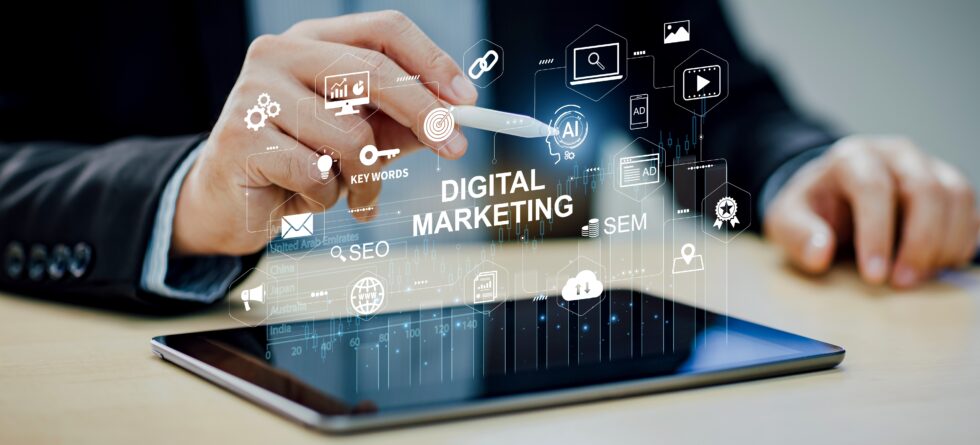
AI is revolutionizing marketing by providing businesses with the tools to deliver more personalized, efficient, and data-driven marketing strategies.
Types of AI Used in Marketing
Predictive Analytics
Predictive analytics uses AI and machine learning algorithms to analyze historical data and predict future trends. This helps marketers understand customer behavior and forecast demand.
-
Customer Segmentation – AI can identify distinct customer segments based on purchasing habits, interests, and demographics.
-
Churn Prediction – Predict which customers are likely to leave or unsubscribe, allowing businesses to take proactive action.
-
Sales Forecasting – Predict future sales to help marketers allocate resources efficiently.
Personalization Engines
AI can analyze vast amounts of data in real time, allowing marketers to create personalized content, product recommendations, and offers tailored to individual consumers.
-
Website Personalization – AI can personalize website content based on a user’s past interactions, preferences, and browsing history.
-
Email Campaigns – Personalize email content (e.g., subject lines, offers) to increase open and click-through rates.
-
Product Recommendations – AI-powered recommendation systems, like those used by Amazon and Netflix, suggest products based on user behavior.
Natural Language Processing (NLP)
NLP allows computers to understand, interpret, and generate human language. This makes it possible for AI to engage with customers more conversationally.
-
Chatbots and Virtual Assistants – AI-powered chatbots can handle customer inquiries, provide support, and guide users through sales funnels 24/7.
-
Sentiment Analysis – AI can analyze social media posts, customer reviews, and feedback to gauge consumer sentiment towards a brand or product.
-
Content Creation – AI tools like GPT (like the one you’re chatting with!) can generate blog posts, social media content, and product descriptions.
Machine Learning (ML) and Deep Learning
Machine learning allows algorithms to learn from data and improve over time without explicit programming. Deep learning is a more advanced form of machine learning that uses neural networks to mimic the human brain’s learning process.
-
Customer Journey Mapping – AI can analyze how customers move through the purchasing funnel, identify obstacles, and suggest improvements.
-
Dynamic Pricing – ML algorithms can adjust pricing in real-time based on demand, competitor prices, and customer behavior.
-
A/B Testing – AI can optimize A/B testing for emails, landing pages, and ads by continuously learning what works best for different audiences.
Programmatic Advertising
Programmatic advertising uses AI to automate the buying and placement of ads across digital platforms. AI analyzes data to target specific audiences with relevant ads in real time.
-
Real-Time Bidding – AI enables real-time auctions for digital ad space, allowing businesses to bid on the best ad placements.
-
Audience Targeting – AI can analyze data from various sources (e.g., browsing history, purchase data, social media activity) to target ads to the most relevant audience.
-
Ad Creative Optimization – AI can automatically test and optimize ad creatives (images, text, call-to-action buttons) to improve engagement.
Image Recognition and Visual AI
AI can analyze and interpret images, making it possible for marketers to extract valuable insights from visual content.
-
Visual Search – Consumers can search for products using images rather than text. AI compares the visual features of the uploaded image to products in a database and returns relevant results.
-
Social Media Monitoring – AI can monitor images and videos shared on social media to identify brand logos, user-generated content, and trends.
-
Content Curation – AI can recommend the best visual content (e.g., images, videos) to include in marketing campaigns based on performance data.
Voice Search Optimization
With the rise of smart speakers and voice assistants (like Siri, Alexa, and Google Assistant), voice search optimization is becoming a key area of focus. AI enables machines to understand and respond to voice commands.
-
Voice Search Marketing – AI can help businesses optimize their content for voice search, ensuring their website ranks well for voice queries.
-
Voice Commerce – AI can facilitate voice-activated purchasing, where consumers can make purchases simply by speaking to their devices.
AI-Powered Analytics and Reporting
AI-driven analytics platforms process large amounts of data to offer actionable insights that marketers can use to improve their campaigns.
-
Real-Time Reporting – AI can generate real-time dashboards that provide insights into campaign performance, customer behavior, and ROI.
-
Data Visualization – AI tools can turn complex data into easy-to-understand visual reports, making it easier for marketers to make informed decisions.
How AI is Shaping the Future of Marketing
AI is an indispensable tool for modern marketers, offering unparalleled opportunities to enhance customer experiences, improve decision-making, and drive more effective campaigns. If it’s through personalization, predictive analytics, or automation, AI is unlocking new levels of efficiency and innovation in marketing.